







No More Bugs — Systemic Imidacloprid Insecticide for Whitefly, Aphids & Fungus Gnats
TGG-NMB-3
Systemic imidacloprid insecticide for whitefly, aphids and fungus gnats. 1ml per litre as a reservoir drench or foliar spray, around six weeks of protection per treatment. Ornamental and non-edible plants only.
- Handpicked by growers
- Ships today
- Real advice, real people
- 5,000+ high yielding customers
- 30-day returns*
- Free shipping over $499*
Pairs well with
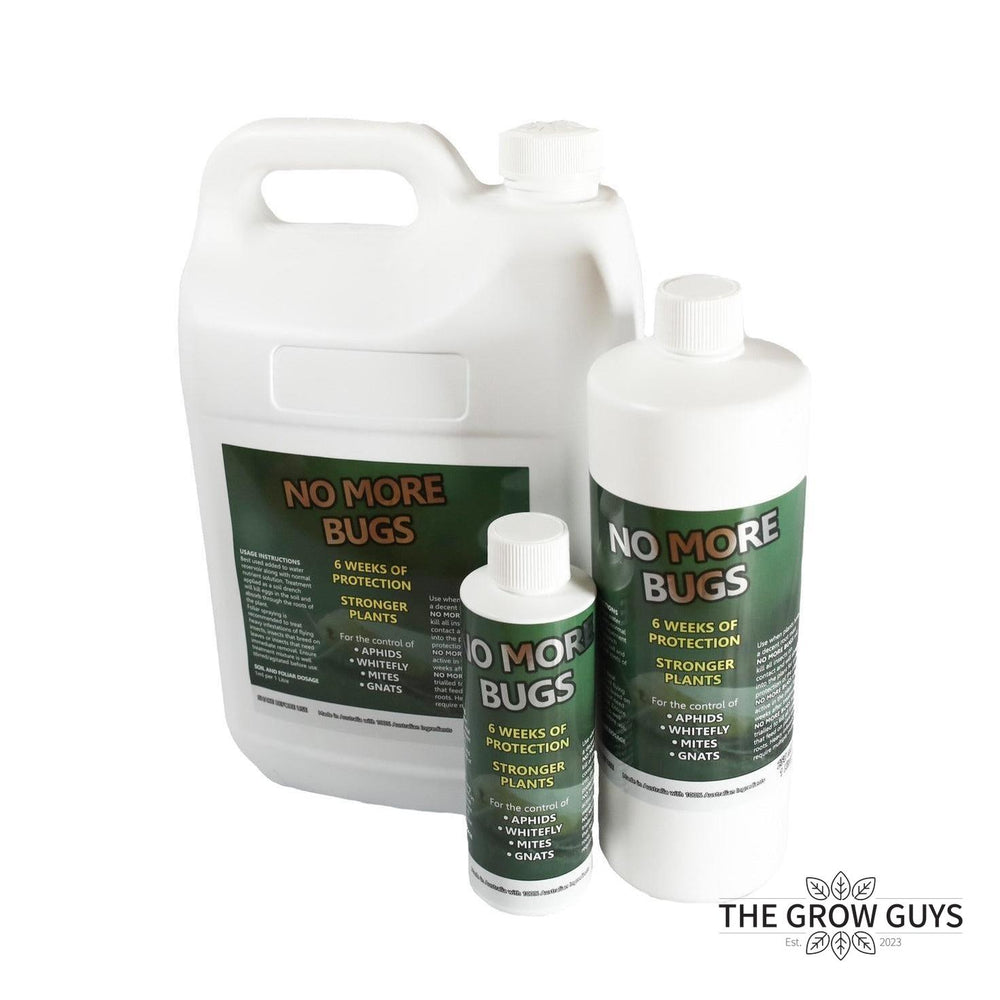
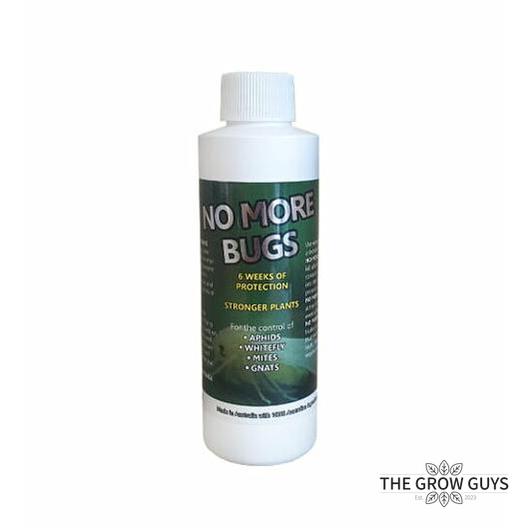
No More Bugs is an Australian-made systemic insecticide concentrate, and the active ingredient is imidacloprid: a neonicotinoid that plants take up through their roots and leaves and move through every part of the plant. Mix it at 1ml per litre into your reservoir or feed water as a drench, or into a sprayer for a foliar hit, and one treatment protects against aphids, whitefly and sciarid fly (fungus gnats) for around six weeks. The drench is the route worth knowing about: it binds into soil, coco or hydro media to hit gnat eggs and larvae where they live, then keeps working from inside the plant as new growth comes on. It comes in 250ml, 1L and 5L, which at 1ml per litre is 250, 1,000 and 5,000 litres of treatment. It is a real insecticide rather than a herbal wash, so it comes with rules: ornamental and non-edible plants only, vegetative stage, never alongside beneficial insects, and it is not a spider mite fix.
Specifications
Grower's Tip
- Treat, do not top up. The label says it stays active in the plant for six weeks, so it is a treatment you apply once and date, not an additive for every reservoir change. A heavy infestation may need a follow-up; after that, stop dosing and monitor.
- Time it for early veg on ornamentals and mother plants. Six weeks from a week-two treatment carries you through the rest of veg and the stretch, which is when whitefly and gnats do their worst.
- Keep it away from anything you eat. No withholding period is published, and a systemic that sits in the plant for six weeks has no business in a herb pot or a tomato. Use a contact spray such as Zero Tolerance or PureCrop1 on edibles.
- Do not buy it for spider mites. Imidacloprid is an insecticide, mites are not insects, and published field research has recorded spider mite numbers climbing on imidacloprid-treated plants because it kills their predators. Kill-A-Mite (abamectin) is the tool for that job.
- Pull the beneficials first. If you run predatory mites, ladybirds or parasitic wasps, this will wipe them out. Pick one strategy per cycle.
- Foliar sprays go on with the lights off, tops and undersides of the leaves, and the foliage dries before the lights come back on. Shake the bottle and keep the sprayer agitated; the label is explicit about mixing.
- Rotate the mode of action. Whitefly resistance to neonicotinoids is well documented. Alternate with a Group 3A pyrethroid such as Scarid 10 for gnats, or a contact wash, between cycles rather than running Group 4A back to back.
- Dispose of leftovers properly. Spent drench and reservoir water carries imidacloprid, which is highly toxic to aquatic invertebrates. Do not tip it down the stormwater drain, and never use this product in aquaponics.
How To Use It
Pairs Well With
Hang them at canopy height before and after treating. Adult whitefly and gnat counts on the trap tell you whether the six weeks are holding.
Kill-A-Mite by NulifeThe actual answer to spider mites. A registered abamectin miticide, and the right tool for the job imidacloprid is the wrong tool for.
Zero Tolerance AerosolHerbal contact spray for edibles, flowering plants and anything No More Bugs cannot go near. Different mode of action, so it doubles as the rotation partner.
Spray Mate by Higgins 2LElectric sprayer that holds constant pressure, so coverage on the undersides of leaves is even and you are not hand-pumping with gloves on.
Gnat NixA physical top-dress barrier that stops adult gnats laying in the media. Drench for what is in there now, Gnat Nix so nothing new gets in.
Pest Management RangeContact washes, miticides, traps and drenches. Build a rotation across modes of action rather than leaning on one active.
Frequently Asked Questions
What is the active ingredient in No More Bugs?
Imidacloprid. It is a neonicotinoid insecticide in IRAC Group 4A, the same active constituent found in Confidor-type systemic garden insecticides. The label describes the product as a blend of organic and inorganic substances and does not state the concentration, so we publish the active here because you should know what is going into your reservoir before you decide to use it.
Does No More Bugs work on spider mites?
No, not reliably, and we would rather say so than sell you a bottle for the wrong job. The label lists mites, but imidacloprid is an insecticide and spider mites are arachnids. No Australian imidacloprid label lists spider mites as a target, and published field research has recorded spider mite numbers climbing on imidacloprid-treated plants because it removes the predators that keep them in check. For spider mites use Kill-A-Mite (abamectin) or a contact wash such as Zero Tolerance, and confirm what you have with a loupe first.
Can I use it on vegetables, herbs or fruiting plants?
No. The label publishes no withholding period, and imidacloprid is a systemic that the label itself says stays active in the plant for six weeks. Keep it to ornamental and non-edible plants. For anything you will eat, use a contact product with a short or zero withholding period such as Zero Tolerance or PureCrop1.
What is the dose rate?
1ml per litre of water, and it is the same rate whether you are drenching, adding it to the reservoir or foliar spraying. That makes the 250ml bottle good for 250 litres of solution, the 1L for 1,000 litres and the 5L for 5,000 litres. Do not go stronger; more concentrate does not buy more protection, it just raises the risk to you and the plant.
Do I add it to every reservoir change?
No. It is a treatment, not a weekly additive. The label rates one application at six weeks of protection and says heavy infestations may need a follow-up. Treat, note the date, monitor with sticky traps, and only re-treat if pressure comes back after the window.
Should I drench or spray?
Drench for prevention and for anything in the root zone. Adding it to the reservoir or feed water at 1ml per litre puts it into the plant systemically and works on sciarid fly eggs and larvae in the media. Spray for a heavy infestation of flying insects, insects breeding on the leaves, or anything that needs removing right now, which is what the label recommends foliar for. Spray with the lights off and let the foliage dry before they come back on.
Can I run it alongside beneficial insects or predatory mites?
No. Imidacloprid is broad-spectrum and will kill predatory mites, ladybirds and parasitic wasps along with the target pests. Choose one approach per cycle: a chemical treatment like this one, or a beneficials programme, not both at once.
Is it safe around bees?
No. Imidacloprid is dangerous to bees, and Australian imidacloprid labels prohibit spraying plants in flower while bees are foraging. In a sealed indoor tent there are no bees to worry about, but do not use it on flowering plants outdoors, on a balcony, or in a greenhouse with open vents.
Can I use it in a recirculating hydro system or in aquaponics?
Recirculating hydro, yes. The label's preferred method is adding it to the reservoir with your normal nutrient solution, and everything running off that reservoir gets treated. Aquaponics, no. Imidacloprid is highly toxic to aquatic invertebrates and you would be dosing the fish tank. When you dump a treated reservoir, keep it away from stormwater drains, ponds and waterways.
Select Size
Know What Is In The Bottle
Systemic protection with a named active. One rate, one treatment, around six weeks.

